
PARTICIPATING INSTITUTIONS
LNEC - National Laboratory for Civil Engineering, I.P.
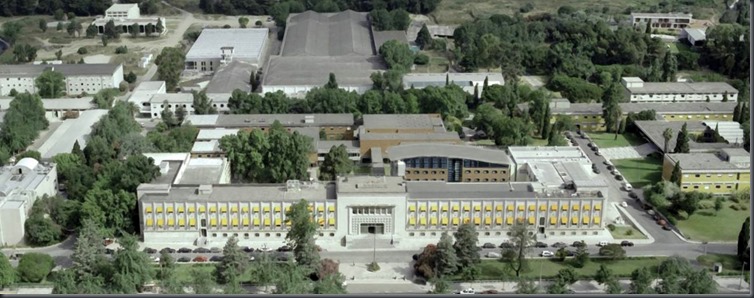
The Laboratório Nacional de Engenharia Civil – LNEC (National Laboratory for Civil Engineering), established in 1946, is a public research institution, devoted to science and technology, with the status of State Laboratory. Located in Lisbon, on a 22ha campus, LNEC works in all the main fields of civil engineering and related scientific areas, giving it a unique multidisciplinary perspective.
The scope of LNEC’s activity includes public works, infrastructures, housing and urban planning, hydraulics and water resources, transportation, environment, construction materials and other products. Its main objectives are safety and quality of the works, protection and rehabilitation of the natural and built patrimony, technological innovation in the building sector and in the fields of water and environment. The activities related to regulation, standardization and quality of construction are equally relevant.
LNEC’s R&D&I activity is aligned with the objectives set out in the major national strategies within the fields of construction, habitat and environment, but also with the EU thematic, such as the Europe 2020 Strategy, Horizon 2020 and Cohesion Policy 2014-2020.
The current Research and Innovation Strategy of LNEC, scheduled for 2013-2020, that frames and guides its Research and Innovation Plan, aims to confer LNEC’s activity greater flexibility and adaptability, and it is based on five structural axes: built heritage, cities and territories, natural resources, risk and security; instruments for innovation.
IST-ID, Association of the Instituto superior Técnico for Research and Development

The Association of Instituto Superior Técnico for Research and Development (IST-ID) is a private not-for-profit institution, which primarily aims at carrying out Science and Technology activities, fostering knowledge transfer and promoting the involvement of national and foreign researchers, internally and externally, in RD&I projects in their areas of expertise. The IST-ID carries out RD&I activities in major areas, which are associated with challenges with a strong impact on society. These are strongly interdisciplinary areas in nature and cut across different fields of engineering, science and technology and architecture.
The RD&I activities comprise not only fundamental aspects but also projects with a strong applied component and the areas of intervention are Basic Sciences, Information and Communication Technologies, Energy, Environment and Mobility, Applied Life Sciences, Materials, Nanotechnologies and Nanosciences, Technology Management and Entrepreneurship, Manufacturing Technologies Engineering, Nuclear Reactors and Accelerators, Nuclear Safety and Radiological Protection.